
Important thoughts: When a computer and a host program (Live Plugin Host / DAW) are used to insert live effects The signal must travel through five stages of cumulative latency (Cumulative Latency).
” Round Trip Latency (RTL) in live performance is the total time an audio signal travels from leaving the source (such as a microphone) to entering the mixer. Forward to external processing on the computer. and runs back and forth through the speakers or the musician's In-Ear Monitor headphones.
When a computer and a host program (Live Plugin Host / DAW) are used to insert live effects. The signal must travel through the Cumulative Latency Bottleneck through 5 main stages as follows:
Signal Loop Journey
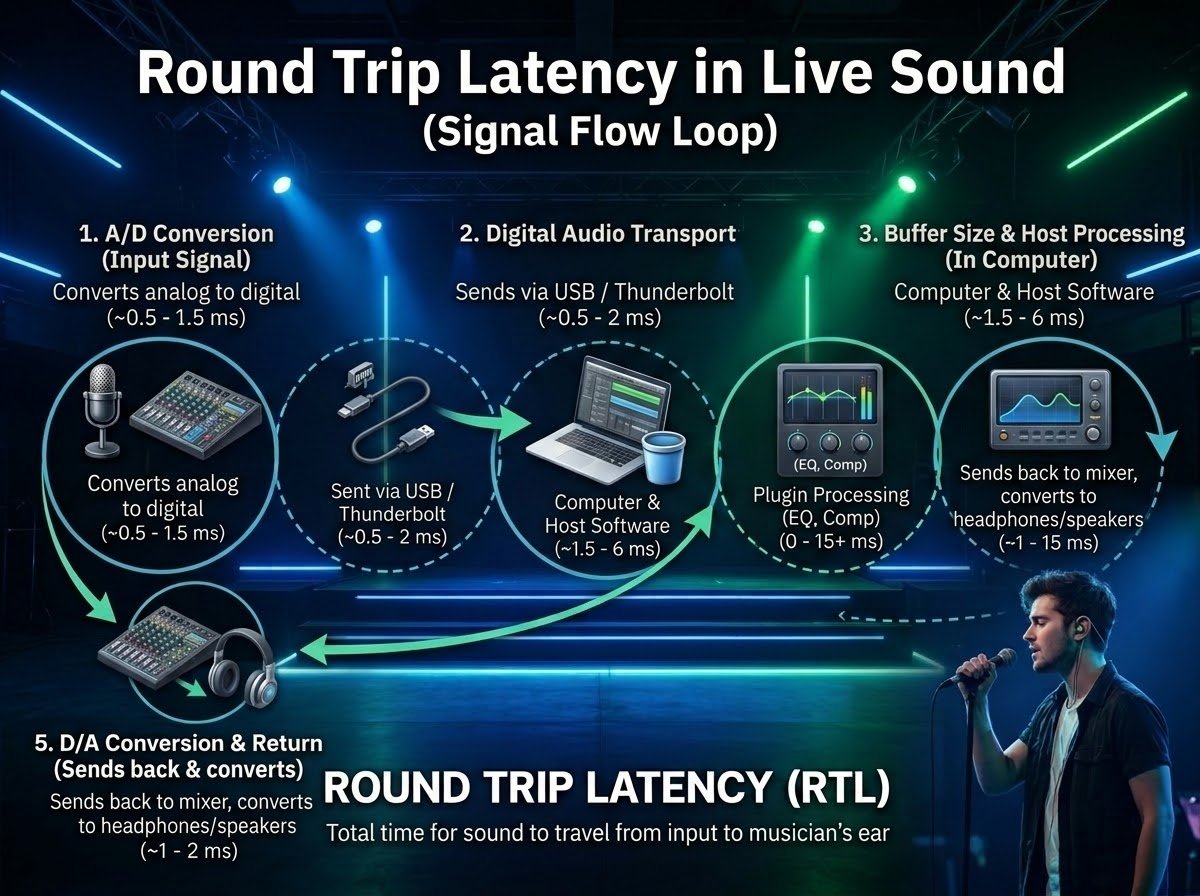
- A/D Conversion (Receiver Mixer):
The microphone sends analog signals to the digital board. The signal is converted to digital data (0 and 1).
Cumulative Latency: ~0.5 – 1.5 ms - Digital Audio Transport (send to computer):
The digital signal is sent over a cable such as USB, Thunderbolt, or Audio Network protocol (Dante, SoundGrid, AVB) into the computer's Audio Driver (ASIO/CoreAudio).
Cumulative latency: ~0.5 – 2 ms (depending on the type of connection) - Buffer Size & Host Processing (the heart of latency):
Host programs (e.g. Ableton Live, Logic, MainStage, SuperRack) must first store data in a "hopper" or buffer in order to prevent the audio from jittering. (Dropouts/Glitches)
Input Buffer: Wait for input queue (~1.5 – 3 ms)
Processing: Signal routing software
Output Buffer: Wait for data to be queued for output (~1.5 – 3 ms)
(The lower the Buffer setting, such as 64 samples, the lower the latency but consumes a lot of CPU.) - Plugin Processing (latency from the plugin itself):
Each plugin takes a different amount of time to calculate:
Zero-Latency Plugins (EQ / Basic Comp): Does not increase latency (0 ms).
Lookahead / Linear Phase / Pitch Correction: This group of plugins is required. "Eavesdropping" before working causes a huge increase in latency in the system.
Cumulative latency: 0 ms to more than 15 ms each. - D/A Conversion & Return:
The sound that passes through the plug-in flows from the computer back into the mixer, through the DSP system inside the board, and converted back into a real audio signal (Analog) and sent to the In-Ear Monitor or speaker cabinet.
Cumulative Latency: ~1 – 2 msSummary of Round Trip Latency figures at the work site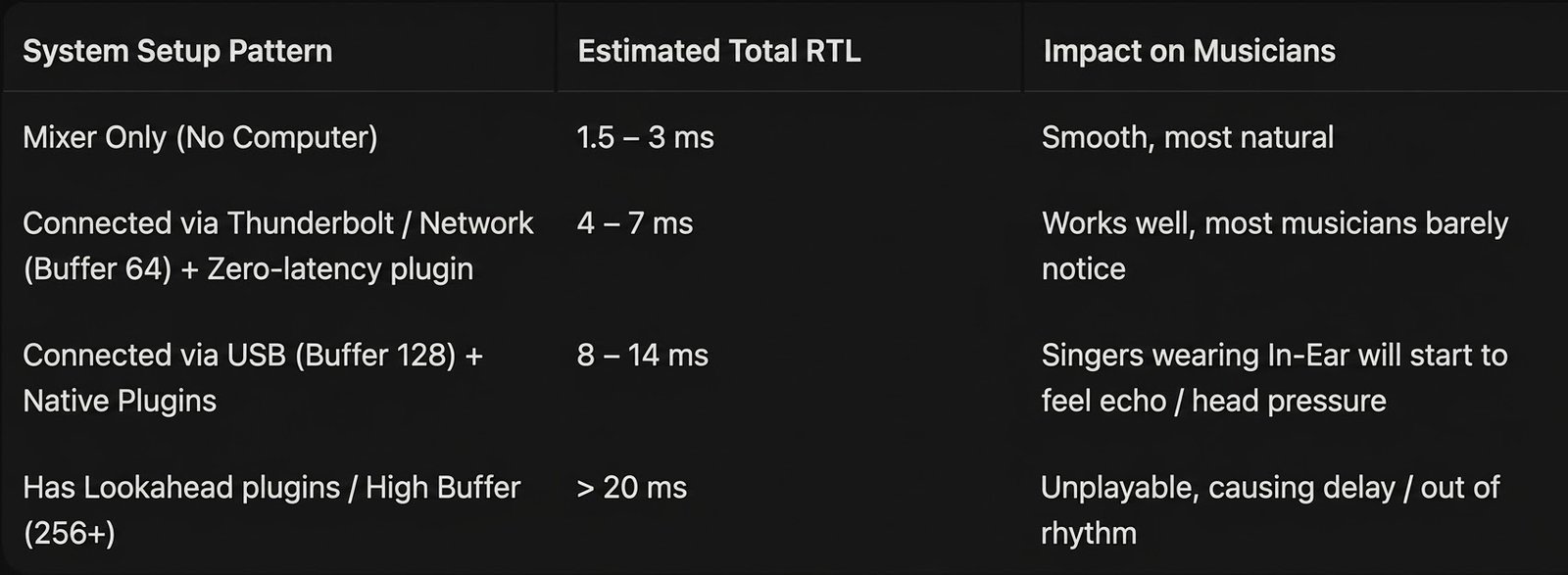
Comparison table and effects